 kelvara
Personal temperature control
With a supported heating and cooling sleep system, the platform can coordinate temperature changes using available device information, room conditions, schedules, and personal preferences. Where a partner device provides estimated sleep stages or movement information, those signals may contribute to approved adjustments.
Two people can have different comfort needs. Supported dual-zone systems allow each side of the bed to follow separate settings. You can pause automation or change your preference without rebuilding the entire routine.
A gentler night and morning
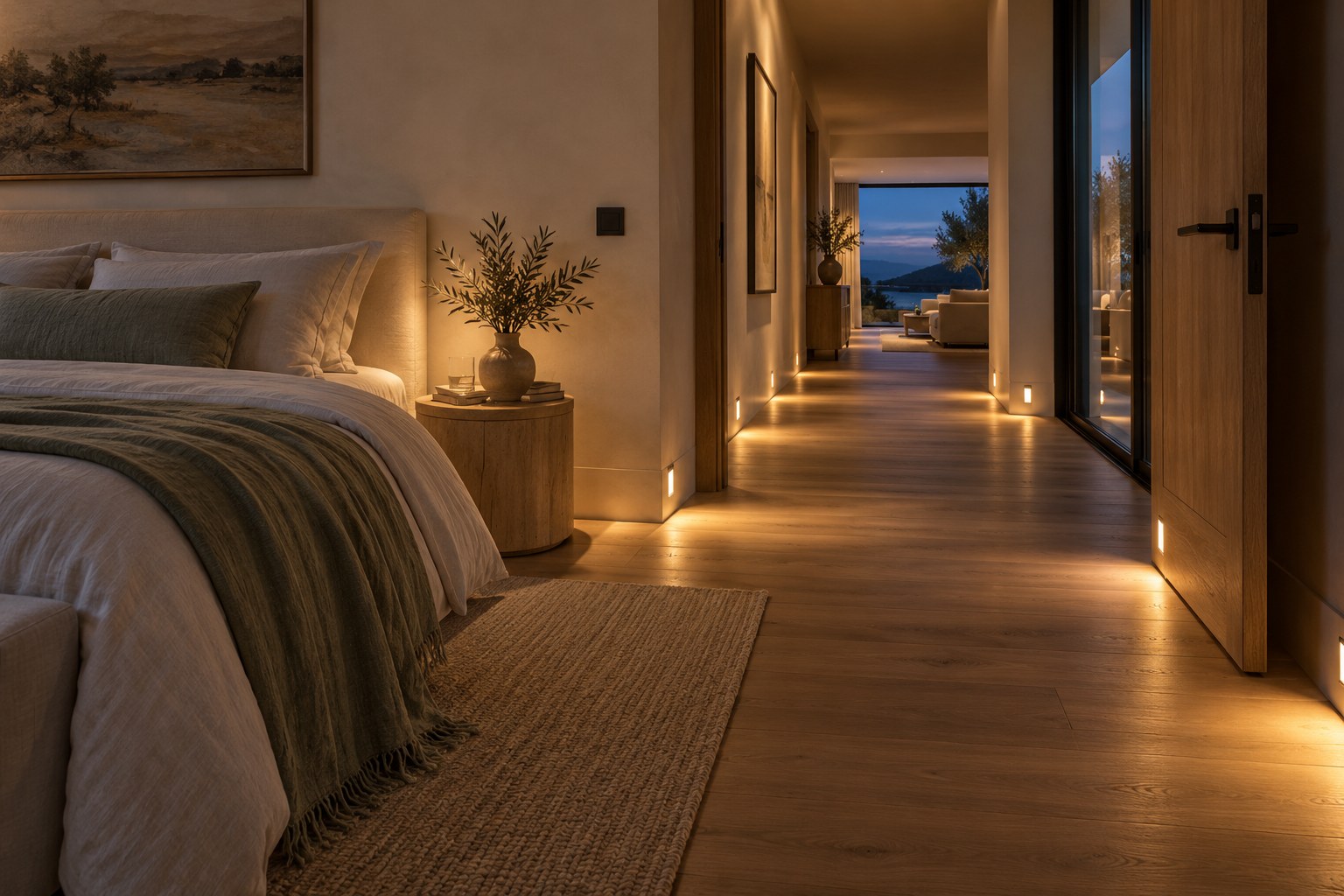
An evening scene can reduce brightness, close selected blinds, and play chosen audio. Bed-exit information can trigger low-level route lighting. A morning scene can gradually brighten the room and display the time, weather, and appointments on a familiar screen.
Sleep information you can understand
Compatible devices may provide estimates of sleep duration, interruptions, or nighttime activity. These estimates need to be understood alongside their source and measurement limitations. Time spent in bed is different from time asleep, and consumer sleep-stage estimates should not be presented as a clinical sleep study.
Your comfort comes first
Adjustments remain within approved limits and the device manufacturer’s instructions. Temperature or bed-position automation should be assessed for the individual user, particularly where reduced sensation, restricted movement, or care needs affect safe use. A person must be able to stop an adjustment easily.